
Key Takeaways
- Use the queen to shrink a box around the enemy king, keeping her a knight's move away from it at all times.
- The queen alone can never mate. Your king must come up to cover the last escape squares.
- Keeping the queen a knight's move from the enemy king makes stalemate almost impossible by construction.
- With correct play this mate takes at most ten moves from any starting position.
The queen mate is the first checkmate most players learn and the one they most often bungle under time pressure. The material is overwhelming, since you have the strongest piece on the board against a bare king, and yet the half-point slips away, usually to stalemate, sometimes to the 50-move rule.
The fix is a method rather than a feeling. Once you know the shape of this mate, it takes about ten moves and no thinking at all.
How does the king and queen checkmate work?
Three steps, in this order:
- Shrink the box. Use the queen to cut off the enemy king, reducing the rectangle of squares he can reach.
- Walk your king up. The queen cannot finish this alone, so your king has to join.
- Mate on the edge, with your king covering the escape squares and the queen delivering the blow.
That's it. The whole technique is step one done carefully, because if you shrink the box correctly, steps two and three happen almost by themselves.
The knight's-move method
Here's the trick that makes this mate nearly automatic and stalemate nearly impossible: keep your queen exactly a knight's move away from the enemy king.
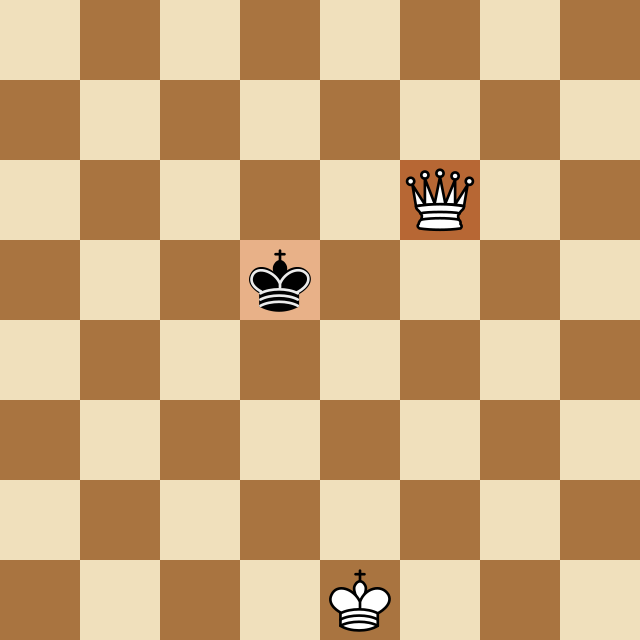
Look at what that accomplishes. From f6 the queen controls the entire 6th rank and the f-file, so the black king is boxed into the bottom-left quadrant. He cannot approach the queen, because every square adjacent to her is covered. And crucially, he always has somewhere to go, so you can never accidentally stalemate him.
Now you simply repeat: the black king moves, and you re-establish the knight's-move relationship on a square that shrinks the box further. Each time you do it, the rectangle gets smaller. The king gets herded toward an edge without you ever calculating anything.
Why does the queen alone never work?
A common beginner instinct is to keep checking. It feels productive, since every check forces a response, but a lone queen giving checks just pushes the king around the board without reducing his space. He walks back into the centre and you've achieved nothing but a step toward the 50-move rule.
The queen's job is confinement, not harassment. Checks only come at the very end, when they actually mate.
And once the king is stuck on the edge, the queen genuinely cannot finish. Put a black king on h8 and a white queen anywhere: either he has a flight square, or the position is stalemate. There is no square from which one queen mates a lone king. Your own king has to supply the missing coverage, which is exactly the same lesson that makes king activity the defining skill of endgame play generally.
How do you deliver the final mate?
Once the enemy king is confined to the edge, bring your king up until it stands directly opposite his, one square apart, with a rank between them. Then the queen steps in.
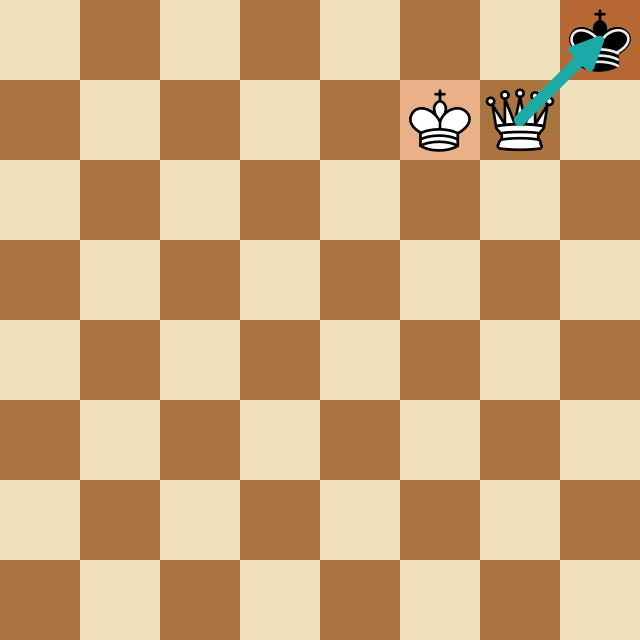
Notice how little the queen is doing on her own. She attacks h8, g8 and h7, but the black king could simply capture her on g7 if the white king weren't there defending. That single defensive job is why the king has to walk up the board first.
Two mating shapes are worth recognising, because they cover almost every case:
- Queen adjacent, king defending (above), where the queen sits right next to the enemy king, protected by yours.
- Queen on the edge line, king opposite, where the queen delivers check along the back rank from a distance while your king covers the two flight squares.
Both are the same idea: the queen takes the edge, your king takes the escape squares.
The stalemate trap to avoid
This one costs more half-points than every other endgame mistake combined:
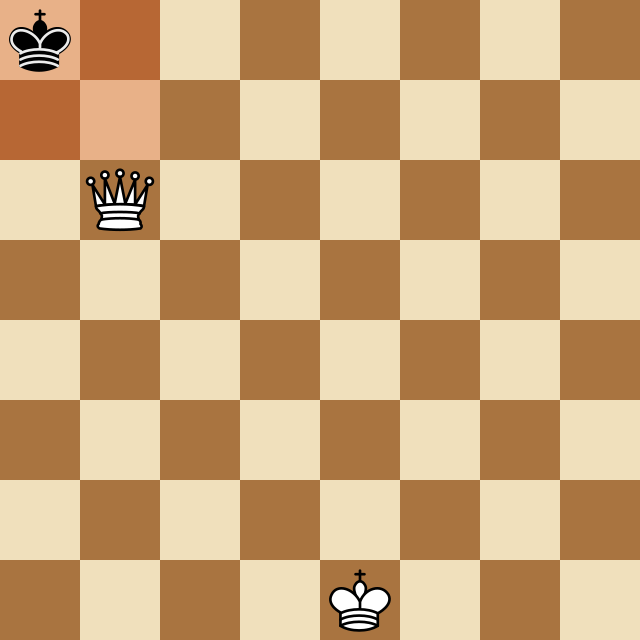
The black king on a8 isn't in check. But a7, b7 and b8 are all covered by the queen on b6. No legal move exists, so the game is an immediate draw.
The queen got too close without giving check. Had she been a knight's move away, on c6 rather than b6, the king would have had b7 available and the win would still be on. This is precisely the disaster the knight's-move method is designed to prevent.
The habit worth building: before every queen move in this endgame, ask one question. After this move, does the enemy king still have a square? If the answer is no and you aren't giving check, pick a different move. It takes two seconds and it never fails you. Building that kind of automatic pre-move check is the core of a reliable thinking process at the board.
How long should this mate take you?
Endgame tablebases put the maximum at ten moves from the worst possible starting position with perfect play, and just nine if you've reached the position by promoting a pawn, as Wikipedia's summary of the elementary mates records. In a real game you'll typically need a few more, and that's fine.
What isn't fine is twenty-five. If the mate regularly takes you that long, you're chasing rather than confining, giving checks that feel like progress but leave the box exactly the same size. Count your moves when you practise. The number tells you honestly whether your technique is working, in a way that "it felt fine" never does.
The 50-move rule is generous here, so you have room to be imperfect. But burning 30 moves on a mate that should take 10 is also burning clock you may need, which is its own way of losing a won game.
How should you practise it?
Set up a queen and king against a lone king on a board editor, put the enemy king in the centre, and play it out against an engine, which will defend as stubbornly as the position allows.
Do it from four or five different starting positions. Then do it again with a clock running, giving yourself sixty seconds, because that's the condition under which you'll actually need it. The mate you can only find with unlimited time isn't one you own yet. If you want to check your move count against perfect play, a public Syzygy tablebase browser will give you the exact distance to mate from any position you set up.
Practising with live engine feedback is where the technique tightens up. With ChessSolve running you'll see the engine's preferred move drawn as an arrow on the board, so when your move count creeps up you can see exactly which of your moves shrank the box and which one just shuffled. That's the difference between memorising a sequence and understanding why it works, the same reason engine analysis helps most when it explains rather than just corrects.
The queen mate is ten moves of pure technique with no judgment required. Keep the queen a knight's move from the enemy king, shrink the box until he's on the edge, march your king up, and finish. Learn it once and you'll never give away another winning endgame to stalemate.
Next in this series: the rook and king checkmate, which is where the real endgame technique starts. Or see all six in the basic checkmates guide.
Want to drill this with live engine arrows on the board? Download ChessSolve, free, works on Chess.com and Lichess.
Frequently Asked Questions
How do you checkmate with just a king and queen?
Use the queen to cut the enemy king into a shrinking box, keeping her a knight's move away from him. Once he's confined to the edge, walk your own king up to stand opposite him, then deliver mate with the queen on the edge rank or file, protected by your king.
Why do I keep stalemating with a queen?
Because the queen takes away so many squares at once. Stalemate happens when you push the enemy king to the edge and then cover his last remaining square without giving check. The knight's-move method prevents it: if your queen is a knight's move from his king, he always has at least one legal move.
How many moves does the king and queen checkmate take?
At most ten moves with perfect play, from the worst possible starting position, and nine if you have just promoted a pawn. Endgame tablebases have solved the position completely. If it's regularly taking you fifteen or twenty, your queen is chasing the king instead of confining him.
Can a queen checkmate without the king?
No. A lone queen can drive the enemy king to the edge but can never deliver mate by herself, because the king would always have an escape square, or the position would be stalemate. Your king is a required attacker in this endgame.
Analyze any game or position free
Paste a PGN or FEN into ChessSolve's free Stockfish analysis board and get best-move arrows and a live evaluation bar — no account needed.
Open the Analysis Board